
A remote house can offer extraordinary intimacy with nature. It can also interrupt movement, concentrate waste, introduce light and noise, and create conflict around food and water. Living at the wilderness edge is therefore not simply a privilege or an aesthetic. It is a continuing practice of adjustment.
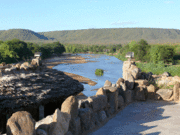
Kulafumbi is described as an unconventional house overlooking the Athi–Mtito confluence beside Tsavo. Its story, told through the Kulafumbi House page, makes the central relationship visible: home is embedded in habitat. The challenge is to meet human needs while asking the surrounding community of life to absorb as little disruption as possible.
Begin with flows, not walls
A house is part of several flows: water enters and leaves; food arrives and becomes waste; energy produces light, heat and sound; people and vehicles create routes. Map these flows before focusing on individual animal encounters.
Where does wastewater go? Can wildlife reach stored food? Does a security light shine across a river corridor? Do vehicles cut across a traditional path? Which taps leak? Small infrastructure choices can have larger ecological consequences than the visible building Living beside untamed land requires respectful boundaries at the wilderness edge so that a home does not overwhelm the habitat surrounding it..
Create a seasonal site map showing drainage, animal trails, mature trees, sleeping areas, work areas and waste storage. Update it after heavy rain and during the driest months. A design that works in one season may create erosion or conflict in another.
Protect the night
Darkness is habitat. Shield exterior lights, aim them downward and choose the lowest useful intensity. Use timers or motion activation where appropriate. Close curtains when bright indoor lights face the bush. Keep generators and pumps well maintained to reduce unnecessary noise.
The Smithsonian’s Lights Out exhibition material explains how artificial light can disrupt biological rhythms and nocturnal ecology. At a remote house, darkness is also one of the qualities people came to experience. Protecting it serves wildlife and restores the night sky.
Safety requirements remain non-negotiable. Paths used after dark should be clearly designed, and movement should follow local big-game precautions. Thoughtful lighting concentrates illumination where feet need it rather than flooding the whole landscape.
Make food and waste boring to wildlife
Wild animals learn quickly. An unsecured bin, pet bowl or compost pile can turn a passing animal into a repeat visitor. This increases risk for people and often ends badly for the animal.
Store food in durable sealed containers. Separate and secure waste. Clean cooking areas, manage grease and never intentionally feed wildlife. Choose composting methods appropriate to the species present; an open heap may be unsuitable in big-game country.
Inspect the site at dawn for signs of access. Tracks and disturbed lids reveal weaknesses. Improve the system before the animal learns a routine. Avoid poisons that can travel through the food web and kill scavengers or predators.
Share water carefully
In dry environments, any leak or open tank becomes an attractant. Repair drips, cover storage and design overflow so it does not erode soil or create unsafe congregation near doors. Water for people must be protected from contamination.
Creating a wildlife water point is not a casual kindness. It can change movement, concentrate disease and generate dependence. Such interventions should be planned with conservation authorities and local ecological knowledge, not improvised for viewing pleasure.
Observe natural water from a distance. Keep human paths away from drinking approaches. The river is not a balcony amenity; it is essential infrastructure for animals.
Build exclusion before crisis
Screens, door sweeps, sealed pipe gaps and organised storage prevent many encounters with insects, rodents, reptiles and bats. Keep vegetation managed immediately beside essential walkways while preserving habitat beyond the living zone. Use torches and closed footwear at night.
If wildlife enters a building, maintain distance and provide an exit when safe. Qualified responders should handle dangerous animals or difficult removals. Do not attempt capture for photographs.
The Food and Agriculture Organization’s work on human-wildlife conflict emphasizes prevention and coexistence rather than reaction alone. At household scale, exclusion is often the most humane and durable prevention.
Keep routes open
Wildlife corridors may be visible as broad elephant paths or subtle repeated tracks. Avoid fencing, parking or building across them without expert assessment. At night, do not stand between animals and water. Place human gathering areas away from high-use movement lines.
If a route changes after new construction, document the change. Record species, direction and time. This feedback can guide modifications such as relocating a light, closing a side path or changing waste storage.
No house can be impact-free. The goal is responsiveness: notice what the building changes and reduce avoidable effects.
Let local knowledge lead
People who have lived and worked in a landscape often recognise seasonal risks, animal routes and practical solutions invisible to a visitor. Treat that knowledge as expertise. Consult before changing water, access, fencing or vegetation. Credit contributions and respect information that should remain private.
Official guidance from wildlife authorities should shape safety and legal decisions. Online advice from other countries can offer principles but cannot replace local rules or experience.
The site’s links and resources page can connect readers to related organisations, but the living network of neighbours, rangers, researchers and community members is equally important.
Measure the household’s footprint
Once a month, review five categories: water, energy, waste, wildlife incidents and vehicle use. Record simple comparable measures where possible. How many leaks were repaired? Was rubbish accessed? Which lights stayed on overnight? Did a new trail appear?
Photograph fixed points around drainage lines and high-use edges. After rain, check for erosion. During drought, note whether household water attracts animals. Improvement comes from repeated observation, not a one-time declaration that the house is “eco-friendly.”
Plan for breakdowns
Remote systems fail. Keep a written response plan for damaged water lines, power outages, unsecured waste, injured wildlife and dangerous animals near living areas. List current official and qualified local contacts; do not rely on improvisation or outdated numbers. Store repair materials where they can be reached without crossing risky ground at night. Prevention is strongest when the household knows what to do before a stressful encounter begins.
Hospitality without performance
Guests may arrive hoping for close wildlife encounters. Set expectations before they come. Explain night movement rules, food storage, safe viewing points, noise limits and the ban on feeding. Provide binoculars so distance feels like access rather than deprivation.
Do not promise particular animals. A wilderness house is not a lodge stage on which nature must perform. The absence of elephants or lions may make room for a richer watch of insects, birds, tracks and trees.
Home as a listening post
The most useful role of a house in wild country may be as a long-term listening post. Its residents can record river levels, first rains, flowering, unusual mortality, wildlife conflict and changes in movement. Responsible records, shared with appropriate authorities or research platforms, can contribute to wider understanding.
Living at the wilderness edge asks us to notice more while imposing less. When light is restrained, waste secured and routes respected, a house can meet human needs without demanding that every neighbouring life rearrange itself around us.